→
Content is loading…
February 25, 2025
15 min read
About MediDrive At MediDrive, we are revolutionizing the Non-Emergency Medical Transportation (NEMT) industry. By entrusting us with your transportation needs, you can focus more on delivering exceptional healthcare. Together, let's drive the future of healthcare mobility and enhance patient care.
Table of Contents
Summary
NEMT integrated account management software is revolutionizing non-emergency medical transportation by unifying scheduling, dispatching, billing, and compliance management into a comprehensive platform. This transformative technology connects patient information, fleet operations, and financial systems to streamline transportation services while elevating healthcare access for all. The guide explores essential features, implementation best practices, and future trends in NEMT technology, providing healthcare transportation providers with actionable insights to optimize their operations and improve patient care delivery.
NEMT integrated account management software represents the future of non-emergency medical transportation, combining scheduling, dispatching, billing, and compliance management into a unified ecosystem that elevates healthcare access for all. At its core, this transformative technology connects patient information, fleet operations, and financial systems to streamline transportation services and shape the future of healthcare mobility. The platform encompasses essential components like multi-fleet management capabilities, real-time GPS tracking, automated trip attestation, and integrated billing systems that work together seamlessly to revolutionize service delivery. Unlike standalone solutions, integrated NEMT software creates a comprehensive operational environment that connects call centers, administrative functions, driver applications, and client booking portals while maintaining the highest standards of HIPAA compliance and data security. This integration empowers providers to manage complex transportation logistics while automating critical business processes like route optimization, payment processing, and regulatory documentation—essential elements in driving the future of healthcare transportation.
Standalone NEMT software solutions operate independently without connecting to other business systems, while integrated platforms are shaping the future of unified operational environments. Standalone tools offer simplicity and lower initial costs but limit the data sharing and automation capabilities essential for elevating healthcare access across departments. Integrated solutions enable seamless information flow between scheduling, billing, and fleet management modules through a centralized database, eliminating manual data entry and format conversion challenges that hinder progress. While standalone applications provide security through isolation, they require middleware and additional costs to connect with other systems, creating barriers to comprehensive care coordination. Integrated platforms deliver superior long-term value by streamlining workflows, reducing duplicate data entry, and enabling real-time visibility across business functions through intuitive dashboards that empower informed decision-making. Forward-thinking providers recognize that while smaller operations may initially benefit from standalone tools, the future of healthcare transportation lies in integrated systems that maintain efficiency at scale while continuously improving patient care delivery.
A unified ecosystem connects scheduling, dispatching, billing, fleet management, and compliance through real-time data sharing and automated workflows.
NEMT integrated software creates a revolutionary ecosystem that connects all operational components through a centralized platform, fundamentally transforming how healthcare transportation is delivered. This unified system links scheduling, dispatching, billing, fleet management, and compliance tools through real-time data sharing and automated workflows that elevate operational excellence. The integration enables seamless information flow between multiple stakeholders—including drivers, dispatchers, healthcare facilities, and payers—ensuring all parties stay informed with instant access to current trip details and service updates. Through secure cloud-based architecture that maintains the highest HIPAA compliance standards, providers can coordinate care effectively across the entire transportation lifecycle while building trust through protected data handling. As detailed in our Advanced Capabilities section, these platforms connect with electronic health records, insurance systems, and payment processors to create comprehensive connectivity that shapes the future of patient care coordination. By eliminating communication delays and reducing administrative overhead, integrated systems empower providers to make data-driven decisions that continuously improve healthcare access for their communities.
NEMT integrated software delivers transformative value across multiple stakeholder groups, revolutionizing the healthcare transportation ecosystem for a more connected future. Patients experience elevated healthcare access through streamlined scheduling, real-time communication, and simplified appointment booking via intuitive mobile interfaces—eliminating phone tag frustrations while empowering them to manage their medical transport needs with dignity and independence. For dispatchers, the integrated platform provides comprehensive fleet visibility, automated scheduling, and dynamic route adjustment capabilities that maximize operational efficiency and shape the future of service delivery. Healthcare facilities gain critical insights through dedicated portals that maintain real-time visibility of patient transport status, enabling superior appointment management and care coordination that improves health outcomes. The software serves brokers and payers by automating ride bookings and data imports across systems while maintaining strict regulatory compliance, including specialized requirements for various state programs. Drivers benefit from optimized routes, real-time traffic updates, and automated navigation through user-friendly mobile applications, while administrative staff leverage streamlined billing, insurance claims processing, and comprehensive document management. As explored further in our Benefits section, this multi-stakeholder approach ensures every participant can fulfill their vital role while maintaining the seamless communication essential for elevating healthcare access across communities. By entrusting your transportation needs to integrated systems, you join a movement that's transforming patient care delivery.
NEMT integrated software is shaping the future of patient information management by centralizing secure digital storage of client details, medical requirements, and transportation preferences. Modern platforms empower providers to maintain comprehensive patient profiles while giving drivers controlled access to essential care requirements, ensuring safe and personalized service delivery that elevates healthcare access. The system transforms client data management through intelligent automated workflows that seamlessly connect scheduling, billing, and service documentation - creating a unified ecosystem that drives operational excellence.
Key capabilities that define industry-leading solutions include storing NEMT clients' details and care specifications in a centralized, secure database that maintains the highest standards of HIPAA compliance and data protection. These advanced systems provide drivers with relevant passenger information precisely when needed, while sophisticated capacity optimization features configure vehicle-specific requirements based on individual patient needs. This ensures providers can match appropriate vehicles with transportation requirements while optimizing space utilization and passenger comfort - a critical advancement in personalized healthcare transportation.
Through automated notifications and real-time tracking features, modern platforms keep patients continuously informed about their transportation status with precise ETA alerts and driver location updates. This transparency and communication excellence represents the future of patient-centered NEMT services, where technology enhances every touchpoint of the healthcare journey.
Sophisticated multi-fleet management capabilities enable providers to expand their impact without technological limitations while maintaining operational excellence.
NEMT integrated software is revolutionizing provider, fleet, and driver management through unified platforms that elevate operational capabilities. Industry-leading systems enable sophisticated multi-fleet management regardless of scale, empowering providers to expand their impact without technological limitations. This scalability represents a fundamental shift in how transportation providers can grow while maintaining operational excellence.
For fleet maintenance, advanced platforms deliver proactive management through automated alerts for vehicle inspections, oil changes, and maintenance requirements. Digital pre and post-trip checklists completed through driver mobile applications ensure consistent safety standards while creating comprehensive documentation trails. The software transforms driver management through sophisticated performance tracking, intelligent scheduling optimization, and real-time communication tools that provide unprecedented workforce visibility and control.
Modern maintenance tracking systems connect directly with service providers through dedicated portals, facilitating rapid vehicle servicing and maximizing fleet availability - critical factors in maintaining reliable healthcare transportation. Intelligent vehicle assignment algorithms match appropriate vehicles with specific patient requirements while simultaneously optimizing route efficiency and fuel economy, demonstrating how technology can balance personalized care with operational sustainability.
Through advanced real-time GPS monitoring, dispatchers gain complete fleet visibility and can automatically generate optimal routes that reduce operational costs while ensuring service excellence. This comprehensive approach to fleet management exemplifies how integrated software is shaping the future of healthcare transportation.
NEMT integrated software is transforming financial operations through sophisticated billing and claims management capabilities that shape the future of healthcare transportation economics. Modern platforms automate complex Medicaid billing processes, dramatically reducing manual data entry while ensuring strict compliance with evolving guidelines and requirements. This automation represents a paradigm shift in how providers manage their revenue cycles, elevating both accuracy and efficiency.
Through advanced API integrations with major brokers and payers, leading systems automatically submit invoices for completed trips while providing real-time revenue tracking from initial booking through final reimbursement. This seamless connectivity ensures providers maintain complete financial visibility across their operations. Automated claim validation capabilities help organizations proactively avoid common rejection causes by verifying patient insurance coverage and documentation completeness before submission - a critical advancement in revenue protection.
For the inevitable denied claims, sophisticated tracking systems monitor Explanation of Benefits (EOBs) and Electronic Remittance Advice (ERAs), enabling providers to rapidly identify issues and submit timely appeals. This proactive approach to denial management significantly improves cash flow and reduces revenue leakage.
Industry-leading financial management tools include highly customizable billing rules that accommodate diverse rate structures and service codes, secure payment processing capabilities that protect sensitive financial data, and comprehensive revenue reporting dashboards. These dashboards provide actionable insights for strategic planning, empowering providers to make data-driven decisions about their operations. Through this comprehensive integration, providers typically achieve up to 25% reduction in billing errors while cutting administrative labor costs in half - demonstrating the transformative power of automation in elevating healthcare transportation services. The enhanced revenue cycle management benefits are explored further in our discussion of operational improvements.
Advanced algorithms analyze traffic conditions, appointment times, and vehicle capacity to achieve fuel cost reductions of up to 30% while ensuring reliable arrivals.
NEMT integrated software is shaping the future of transportation efficiency by combining intelligent route optimization with dynamic scheduling capabilities. Advanced algorithms calculate optimal routes by simultaneously analyzing traffic conditions, appointment times, vehicle capacity, and safety parameters - achieving fuel cost reductions of up to 30% while ensuring reliable, timely arrivals that elevate patient care standards.
Real-time GPS tracking empowers dispatchers with complete fleet visibility, enabling them to provide drivers with precise turn-by-turn navigation while the system's automated scheduling capabilities instantly adapt to last-minute changes such as cancellations or urgent new bookings. This responsiveness represents a fundamental advancement in how providers can maintain service excellence despite the inherent unpredictability of healthcare transportation.
Sophisticated capacity optimization features configure vehicle-specific requirements based on individual patient needs, enabling providers to maximize trip efficiency whether coordinating single passengers or complex multi-stop routes. For dispatchers, these intelligent systems transform daily operations by automatically matching the closest available vehicles to new requests, considering multiple factors including estimated driver locations, vehicle capabilities, and specific patient requirements to recommend optimal assignments.
Safety enhancement through technology represents another crucial advancement, with systems planning routes that strategically minimize traffic crossings and complex turns while avoiding historically accident-prone areas. This proactive approach to safety results in smoother, more secure journeys for both drivers and passengers - a critical consideration in protecting vulnerable populations.
Through seamless integration with billing and compliance modules, these routing capabilities ensure complete documentation of services provided while maintaining operational transparency. This interconnected approach exemplifies how modern NEMT technology is elevating healthcare access by transforming every aspect of the transportation experience, from initial scheduling through successful delivery and payment processing.
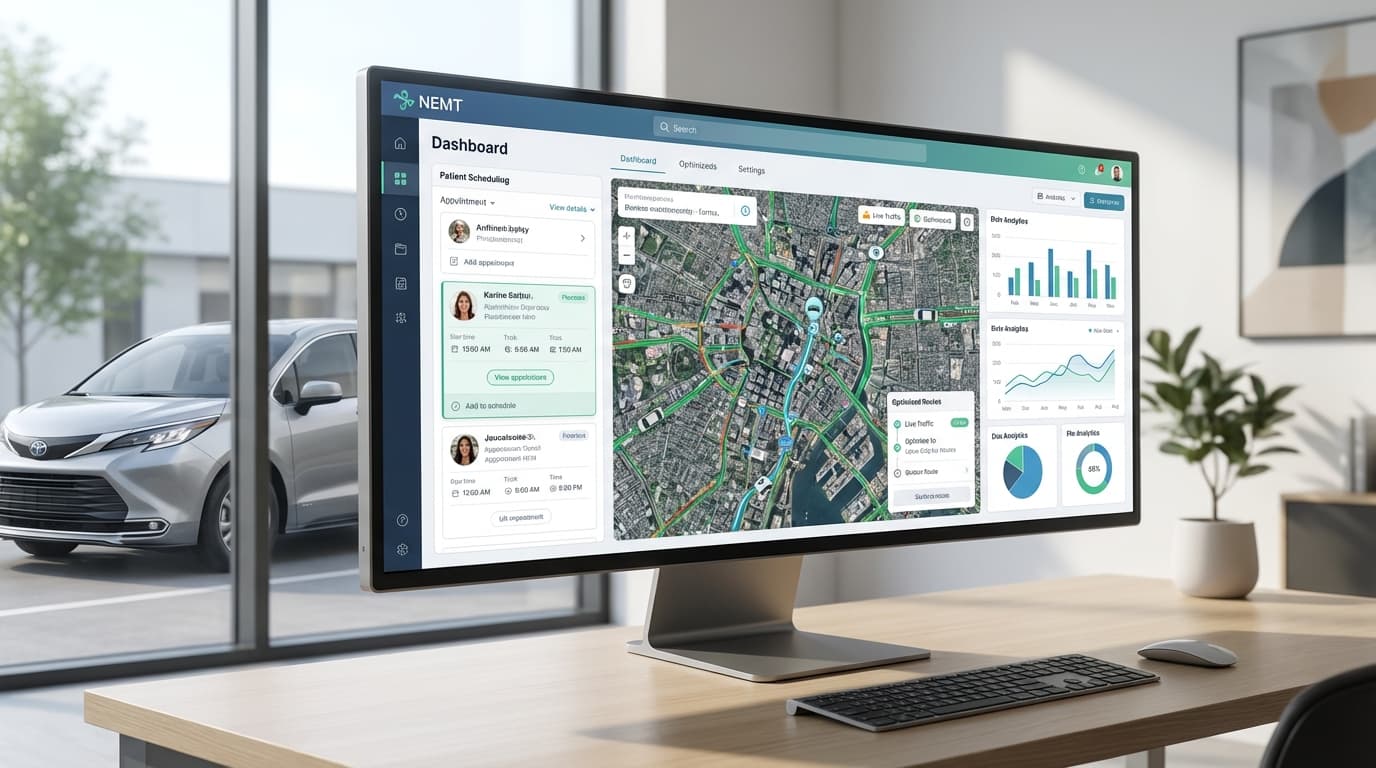
Modern NEMT software transforms raw operational data into actionable insights through real-time analytics dashboards that shape the future of healthcare transportation. These sophisticated tools monitor key performance indicators including trip completion rates, on-time performance, fuel consumption, and customer satisfaction metrics to enable data-driven decision making. The platform's customizable dashboards can be tailored to specific roles - dispatchers focus on real-time fleet status and scheduling, while managers access broader operational metrics and financial analytics to elevate healthcare access quality. Through automated data collection and analysis, providers can identify emerging service issues before they impact patients, with capabilities to investigate declining performance in specific service areas and implement immediate corrective actions. Financial analytics guide strategic planning by examining revenue patterns, highlighting profitable routes, and uncovering cost reduction opportunities across the operation. The system's predictive capabilities analyze historical trends to forecast demand patterns, optimize fleet utilization, and anticipate maintenance requirements - insights that were impossible with traditional dispatch systems. For regulatory compliance, the platform automatically compiles required documentation and generates formatted reports, eliminating manual data compilation while ensuring consistent accuracy. This comprehensive analytics approach positions providers at the forefront of industry innovation, enabling significant operational improvements as detailed in our Benefits section.
Automated compliance management tracks regulatory requirements across HIPAA, DOT, and state licensing while maintaining detailed audit trails.
NEMT integrated software streamlines compliance management through automated documentation and verification systems that entrust your transportation needs to secure, efficient processes. The platform automatically tracks regulatory requirements across HIPAA, DOT, state licensing, and insurance documentation while maintaining detailed audit trails of all system activities. For data security, the software implements role-based access controls, encryption for data in transit and at rest, and multi-factor authentication to protect sensitive patient information - critical features given healthcare's increasing cybersecurity challenges. The system automates credential tracking for drivers and vehicles, monitoring license expiration dates, medical certifications, and required training renewals while generating alerts for potential compliance violations. Documentation automation extends to electronic trip verification, with features for capturing digital signatures, photos for trip documentation, and automated generation of required reports for regulatory agencies. Through direct API integrations with brokers and healthcare systems, the software ensures accurate documentation transfer while maintaining HIPAA compliance and data security protocols. This comprehensive approach to compliance management elevates your healthcare access by significantly reducing administrative burden while ensuring accuracy - benefits we explore further in our operational efficiency discussion.
NEMT integrated software connects seamlessly with healthcare systems and insurance platforms through robust API integrations, shaping the future of coordinated care delivery. The platform automatically syncs transportation data with electronic health records (EHR) and hospital systems to improve care coordination and reduce missed appointments. For insurance and billing operations, direct API connections to major brokers enable automated invoice submission for completed trips while maintaining real-time revenue tracking from initial booking through final reimbursement. The software's integration capabilities extend to Medicaid and other insurance providers, ensuring compliance with specific billing requirements while facilitating direct billing for expedited reimbursements. These connections create a unified data flow that eliminates manual entry, reduces errors, and accelerates payment processing - essential features for modern healthcare operations. The platform's HIPAA-compliant architecture ensures secure data exchange with healthcare partners while building trust through protected information handling. Through these integrations, providers can automate complex workflows across scheduling, billing, and compliance documentation while maintaining seamless communication between transportation services and healthcare delivery systems.
Mobile applications create seamless communication channels between providers, drivers, and patients while ensuring transparency throughout the transportation journey.
NEMT integrated software leverages mobile applications to create seamless communication channels between providers, drivers, and patients - a critical component in driving the future of healthcare mobility. The platform's mobile apps enable drivers to view daily trips, manage schedules, and receive real-time route updates directly through their smartphones or vehicle Bluetooth systems. For patients, the software provides automated notifications about vehicle arrival times, driver location tracking, and secure messaging capabilities - all while protecting private phone numbers through in-app communication. This approach elevates your healthcare access by ensuring transparency and peace of mind throughout the transportation journey. The mobile interface streamlines trip verification by allowing drivers to collect digital signatures, capture required photos, and document vital information directly through their devices. Through enhanced GPS technology, the platform optimizes routes in real-time by factoring in traffic conditions, road closures, and accidents to ensure efficient patient transport. This mobile accessibility extends to dispatchers, who can proactively monitor fleet status and quickly address scheduling issues through the same integrated ecosystem. The result is a unified communication environment that connects all stakeholders while maintaining HIPAA compliance and data security protocols - building on the essential features discussed earlier to deliver exceptional service quality.
NEMT integrated software is shaping the future of operational efficiency by delivering transformative cost reductions across multiple areas. Advanced route optimization algorithms are revolutionizing fuel management, reducing costs by 15-25% while cutting labor expenses by 10-20% through intelligent scheduling and automated dispatching. This technology empowers providers to elevate their service capacity, handling 150% more trips with existing dispatch staff, while integrated billing systems slash administrative labor costs by up to 50% through strategic automation. Real-time GPS tracking and dynamic route adjustments represent the cutting edge of fleet management, helping providers minimize vehicle wear while maximizing utilization - with forward-thinking organizations achieving up to 30% reduction in fuel consumption through optimized routing. The platform's comprehensive automation extends to compliance management, where providers are experiencing a 50% reduction in administrative workload while improving documentation accuracy by 25%. These efficiency gains create a compounding effect through integrated billing and claims processing, with providers seeing up to 25% fewer missed or unbilled claims while significantly reducing billing errors - truly elevating the standard of NEMT operations.
Comprehensive automation streamlines billing accuracy by automatically capturing billable services, processing claims, and dispatching timely invoices.
NEMT integrated software is revolutionizing revenue cycle management by transforming financial processes through comprehensive automation and intelligent optimization. This next-generation technology streamlines billing accuracy by automatically capturing billable services, processing claims, and dispatching timely invoices - dramatically reducing administrative burden while ensuring proper reimbursement for every service delivered. Through sophisticated API integrations with brokers and insurance platforms, these systems are elevating payment processing speed while maintaining meticulous tracking from initial booking through final reimbursement. The software's intelligent claim validation capabilities help providers stay ahead of common rejection causes by proactively verifying patient insurance coverage and documentation before submission. Advanced tools continuously monitor Explanation of Benefits (EOBs) and Electronic Remittance Advice (ERAs), empowering providers to swiftly identify and resolve denied claims. Real-time analytics illuminate revenue patterns and billing performance metrics, enabling providers to identify bottlenecks, implement strategic corrections, and make data-driven decisions that optimize cash flow - truly shaping the future of financial management in healthcare transportation.
NEMT integrated software is elevating healthcare access by fundamentally transforming service quality and patient satisfaction. Understanding that patients prioritize timeliness, comfort, and compassionate service from well-equipped crews, modern platforms are shaping the future of patient-centered transportation. Advanced scheduling and real-time tracking capabilities are reducing wait times by up to 30% while empowering providers to dynamically adjust routes when challenges arise. This technology-driven transformation is yielding remarkable results - driving 4-8% revenue growth through enhanced service experiences, with 85% of patients actively choosing providers recognized for exceptional care. The platform's comprehensive patient data management ensures drivers have instant access to essential care requirements, enabling safe, personalized service delivery while maintaining strict HIPAA compliance. By automating trip verification, documentation, and communication channels, these innovative systems eliminate traditional friction points that have long impacted patient satisfaction. Real-time notifications keep patients informed and engaged throughout their journey, providing vehicle arrival times and driver locations through secure messaging that protects private information. These advancements are creating measurable improvements in patient experience scores - outcomes that correlate directly with enhanced health results and improved adherence to medical care plans, truly demonstrating how integrated software drives the future of patient-centered NEMT services.
Advanced analytics transform raw operational data into powerful insights that enable providers to forecast demand, optimize resources, and identify emerging opportunities.
NEMT integrated software is shaping the future of strategic decision-making by transforming raw operational data into powerful insights through advanced analytics capabilities. These innovative platforms empower providers to anticipate demand patterns, optimize resource allocation, and proactively identify emerging service challenges before they impact patient care. By leveraging sophisticated analysis of historical trip data, forward-thinking companies can forecast peak usage periods, determine optimal vehicle deployment strategies, and discover opportunities for route enhancement that typically reduce fuel costs by 15-25%. The software's intelligent dashboards deliver personalized insights tailored to each role - dispatchers gain real-time fleet visibility while executives access comprehensive operational and financial analytics to shape strategic direction. For organizations focused on sustainable growth, these analytics tools illuminate expansion opportunities through detailed examination of service area coverage, fleet utilization patterns, and emerging market demands. The system's predictive intelligence helps providers stay ahead by anticipating maintenance requirements, optimizing scheduling patterns, and identifying high-value service areas through deep analysis of historical performance metrics. Through continuous automated data collection and processing, providers can monitor critical performance indicators including trip completion rates, on-time performance, and customer satisfaction metrics - enabling agile operational adjustments that elevate service quality. This data-driven transformation typically empowers providers to reduce administrative labor costs by 10-20% while enhancing documentation accuracy by 25% through intelligent compliance monitoring and reporting - truly demonstrating how data is revolutionizing healthcare transportation management.
Selecting the right NEMT software starts with a thorough evaluation of your organization's specific operational needs and requirements. The assessment should begin with analyzing your local market demographics, including senior populations, dialysis patients, and individuals with chronic conditions who require regular medical transportation[38]. Your software requirements must align with key compliance standards, including HIPAA regulations for protecting patient information, ADA accessibility requirements, and state-specific Medicaid billing protocols[39]. The platform should support essential operational components like driver qualification tracking, vehicle maintenance scheduling, and comprehensive insurance documentation[39]. For scaling organizations, the software must facilitate integration with healthcare systems while enabling real-time communication between dispatchers, drivers, and patients through mobile interfaces[40]. The assessment should also consider your organization's dispatch and scheduling complexity - manual methods often lead to inefficiencies and errors, making cloud-based solutions necessary for operations that manage multiple vehicles and high trip volumes[40]. This evaluation process helps identify specific features needed to automate critical workflows while maintaining regulatory compliance and service quality standards[39].
Essential evaluation criteria include routing optimization, billing automation, user interface accessibility, and integration capabilities with existing systems.
When evaluating NEMT software options, focus on core operational capabilities that align with your agency's needs. The platform must efficiently handle routing optimization, billing automation, and trip management while integrating seamlessly with existing systems[41]. Essential evaluation criteria include user interface accessibility across multiple devices, real-time scheduling capabilities, and automated dispatching features that consider driver availability and vehicle capacity[42]. The software should provide comprehensive security measures, including HIPAA compliance and data protection protocols, along with robust reporting tools that deliver actionable insights into key performance metrics like trip completion rates and on-time performance[42]. Integration capabilities with EHR systems and insurance platforms are crucial for streamlining workflows, while scalability ensures the software can grow alongside your operations without compromising performance[42]. Evaluate customer support quality, including implementation assistance, ongoing training resources, and post-deployment technical support availability[43]. Consider the total investment beyond initial pricing, including setup fees, maintenance costs, and potential charges for additional features or users to avoid unexpected expenses[43]. The chosen solution should demonstrate clear ROI potential through operational improvements like reduced fuel consumption, enhanced dispatch efficiency, and more accurate billing processes[41].
When evaluating NEMT software vendors, prepare targeted questions that reveal their capabilities and limitations. Ask about implementation timelines, available support resources, and response time commitments to understand the vendor's ability to partner in your success[23]. Request specific examples of integrations with EHR systems, insurance platforms, and accounting software to verify compatibility with your existing tools[23]. Examine their security certifications like SOC 2 or ISO 27001, and probe their procedures for handling potential security incidents and data breaches[23]. Question vendors about their experience serving similar-sized NEMT providers and ask for references from current customers who can speak to system performance and support quality[23]. Investigate their product development roadmap to ensure planned features align with your growth trajectory, while verifying their financial stability to support ongoing development[23]. Be wary of vendors who make unrealistic implementation promises or show reluctance to provide customer references - these often indicate potential support issues later[23]. For cloud-based solutions, inquire about uptime guarantees, data backup procedures, and compliance with healthcare regulations like HIPAA[23]. Request detailed information about training programs, including role-specific training for dispatchers, drivers, and administrators[23].
Most providers achieve positive ROI within months through combined benefits of automated scheduling, reduced fuel costs, and decreased administrative overhead.
NEMT software investments require careful analysis of both direct and indirect costs to determine true ROI. The total cost calculation must include initial software fees, ongoing subscription costs, implementation expenses, and training requirements. Cloud-based solutions typically charge monthly or annual fees based on fleet size, while on-premise systems require larger upfront licensing costs plus maintenance fees. ROI measurement should track key metrics including fuel savings (15-25% reduction), staff efficiency gains (up to 50% reduction in administrative work), and improved trip completion rates (95%+ success rates). The ROI formula ((Net Benefits – Total Investment) / Total Investment) × 100 helps providers quantify returns through metrics like reduced fuel consumption, minimized vehicle wear, optimized routing, and enhanced billing accuracy. Most providers achieve positive ROI within months through combined benefits of automated scheduling, reduced fuel costs, increased trips per vehicle, and decreased administrative overhead.
A successful NEMT software implementation requires a detailed roadmap that starts with thorough needs assessment and planning, positioning your organization to shape the future of healthcare transportation. Begin by documenting your payer mix, billing requirements, and compliance needs, particularly around Medicaid's strict documentation standards and regulatory requirements. Create specific implementation timelines broken into distinct phases, including data preparation, testing, training, and go-live dates, while building in buffer time for unexpected delays. The roadmap should outline clear roles and responsibilities, with designated project leads for key areas like data migration, staff training, and vendor coordination.
For optimal results, schedule implementation during off-peak periods when key staff are available and avoid rushing the process. The plan must address critical integration points with existing systems, particularly EHR platforms and insurance systems, while maintaining the strict security protocols discussed in earlier sections. Establishing specific milestones helps measure progress, such as completing data cleansing, running successful test claims, and achieving staff certification on the new system. The implementation strategy should also include comprehensive testing scenarios that mirror your actual operations, including wheelchair-accessible vehicles, multi-stop trips, and various insurance types. This methodical approach elevates your healthcare access capabilities while ensuring seamless transition to integrated account management.
Strategic data migration focuses on adapting existing workflows rather than creating entirely new processes, reducing staff burden and accelerating adoption.
Data migration and system integration require careful planning and execution to ensure successful NEMT software implementation. The process starts with thorough data preparation - cleaning and organizing existing operational data, trip records, and patient information before migration begins. For optimal results, providers should compile accurate estimates of expected ride volumes, patient needs, and county-level service areas to help establish appropriate transportation networks.
As detailed in the integration capabilities discussed earlier, the platform must connect with multiple systems through standardized APIs and webhooks, enabling real-time data synchronization between EHR platforms, scheduling tools, and accounting software. The cloud-based architecture facilitates secure data exchange while maintaining the compliance standards outlined in previous sections. Early preparation of comprehensive baseline data, including direct metrics like no-show rates and indirect measures like discharge-to-departure times, proves essential for measuring implementation success.
Organizations should focus on adapting existing workflows rather than creating entirely new processes, as modifying familiar procedures reduces staff burden and accelerates adoption. This strategic approach to data migration and integration positions providers to achieve positive ROI within months through improved operational efficiency and reduced administrative overhead. At MediDrive, we understand these complexities and are committed to supporting your seamless transition to integrated account management.
NEMT software training requires a comprehensive approach focused on role-specific needs and change management. The program should start with essential safety and compliance training, including proper operation of wheelchair lifts, vehicle safety protocols, and HIPAA requirements to ensure passenger protection[50]. For drivers, structured on-the-job training with new technology proves essential, as many experienced drivers may need additional support adapting to digital systems. Identifying driver champions who can mentor peers and promote acceptance of new processes accelerates adoption across the organization[51]. Dispatchers require focused training on system capabilities since they manage real-time fleet tracking and automated scheduling features. Their proficiency directly impacts operational efficiency, making hands-on practice with new workflows critical before go-live[51]. The training approach must extend beyond initial implementation, incorporating regular check-ins during early adoption and ongoing refresher sessions to reinforce proper system use[51]. This continuous development ensures staff maintain proficiency while adapting to evolving operational needs. Organizations should also prepare clear procedures for handling common situations during transition, along with guidelines for addressing unexpected issues that arise during daily operations[51].
Phased implementation combined with continuous monitoring helps organizations overcome resistance to change and integration challenges effectively.
NEMT software implementation faces several key technical and operational hurdles that require strategic solutions. Legacy workflows present a significant challenge, as many providers still rely on outdated practices like spreadsheets or manual record-keeping that lack compatibility with modern platforms. The security and compliance considerations detailed throughout this guide must be carefully managed during implementation to ensure patient privacy protection.
Employee resistance often emerges from fear of change and perceived complexity of new systems, requiring the comprehensive training programs and change management approaches outlined above. Integration challenges arise when coordinating multiple vendors with incompatible protocols, particularly for providers using different systems for dispatching, routing, and billing.
The most effective path forward combines phased implementation with continuous monitoring - running legacy and new systems in parallel while collecting user feedback and tracking key performance indicators. For optimal results, providers should develop role-specific training programs, leverage hands-on instruction with platform experts, and maintain ongoing education through help centers and training portals. Regular assessment of system performance and user adoption helps identify areas needing additional support or refinement. Success requires selecting scalable solutions that can grow alongside operations while maintaining seamless integration with existing workflows. This approach to overcoming implementation challenges positions organizations to elevate their healthcare access capabilities and shape the future of non-emergency medical transportation.
AI and machine learning are shaping the future of NEMT operations by revolutionizing how providers approach routing, scheduling, and compliance management. Advanced algorithms now analyze complex datasets encompassing historical trip patterns, real-time traffic conditions, and individual patient requirements to create dynamically optimized transportation solutions. The integration of AI has unlocked unprecedented operational insights, enabling providers to identify and respond to emerging transportation patterns that directly impact service quality and patient outcomes. Modern AI-powered platforms represent a paradigm shift in dispatch capabilities, combining predictive modeling with intelligent automation to transform how NEMT services operate. These sophisticated systems simultaneously evaluate driver positioning, specialized vehicle requirements, patient care needs, and equipment specifications to ensure optimal service matching. Leading-edge implementations demonstrate the transformative potential, with providers reporting dramatic reductions in scheduling complexity while achieving industry-leading customer satisfaction metrics. The technology extends beyond operational efficiency to strengthen compliance frameworks through intelligent documentation and verification systems that maintain the highest standards of patient data protection. With the NEMT market experiencing exponential growth and projected to exceed $20 billion by 2030, AI capabilities have evolved from competitive advantage to essential infrastructure for providers committed to elevating healthcare access.
Unified data exchange networks facilitate instantaneous communication between transportation providers, healthcare facilities, and payers while maintaining strict security protocols.
NEMT integrated software is evolving to create seamless connections across the entire healthcare ecosystem through groundbreaking interoperability capabilities. Modern platforms are establishing unified data exchange networks that facilitate instantaneous communication between transportation providers, healthcare facilities, and payers while maintaining the strictest data security protocols. This comprehensive integration directly addresses critical social determinants of health by ensuring equitable access to medical care, particularly transforming outcomes for underserved rural communities and populations facing transportation challenges. The emerging interoperability framework encompasses multiple sophisticated levels - from foundational data transmission through semantic understanding to organizational process alignment - creating an unprecedented ecosystem for coordinated care delivery. Advanced API architectures now enable automated, bidirectional information flow between electronic health records, appointment scheduling systems, and insurance platforms, fundamentally reimagining how healthcare transportation integrates with clinical care. These technological connections represent a significant leap forward in operational excellence, as healthcare organizations report transformative improvements in patient outcomes through enhanced appointment adherence and the elimination of transportation as a barrier to care. At MediDrive, we're at the forefront of this interoperability revolution, committed to building the connections that elevate your healthcare access and ensure no patient misses critical care due to transportation challenges.
NEMT software platforms are pioneering next-generation self-service capabilities and digital experiences that reflect the evolving expectations of today's healthcare consumers. Modern patients demand intuitive, consumer-grade interfaces that match the convenience they've come to expect from digital services, inspiring the development of sophisticated mobile applications that redefine the transportation experience. These innovative platforms feature real-time trip visibility, intelligent appointment reminders, and secure communication channels that respect patient privacy while fostering connection. The digital transformation extends far beyond basic functionality - it fundamentally reimagines how patients interact with their healthcare transportation. Contemporary mobile solutions deliver proactive notifications about vehicle status, provide transparent driver tracking, and enable secure messaging that protects personal information while maintaining open communication lines. Patient portal integration represents another leap forward, offering comprehensive self-service capabilities that encompass booking, rescheduling, and digital documentation within a unified, compliant environment. Through advanced positioning technology and predictive arrival algorithms, these systems provide patients with unprecedented transparency and control over their transportation experience. This patient-centric approach to digital innovation is yielding remarkable results, with forward-thinking providers consistently achieving exceptional satisfaction metrics that demonstrate the power of technology to transform healthcare access.
Predictive analytics transforms reactive service models into proactive, intelligence-driven transportation ecosystems that optimize both immediate performance and long-term sustainability.
Predictive analytics represents the next frontier in NEMT operations, transforming reactive service models into proactive, intelligence-driven transportation ecosystems. As discussed in our operational efficiency section, these advanced analytical capabilities build upon established optimization techniques to unlock entirely new dimensions of performance improvement. Modern platforms now leverage sophisticated modeling to forecast demand patterns, anticipate service bottlenecks, and preemptively address operational challenges before they impact patient care. The convergence of predictive analytics with real-time operational data creates unprecedented opportunities for service excellence. These intelligent systems continuously learn from transportation patterns, patient behaviors, and external factors to refine their predictions and recommendations. By analyzing the complete spectrum of operational variables - from seasonal demand fluctuations to equipment maintenance cycles - predictive analytics enables providers to make strategic decisions that optimize both immediate performance and long-term sustainability. The technology extends beyond operational metrics to encompass comprehensive compliance monitoring and quality assurance, ensuring that growth never compromises care standards or regulatory adherence. Forward-thinking providers are discovering that predictive analytics doesn't just improve existing operations - it reveals entirely new possibilities for serving patients and communities. As the NEMT industry continues its rapid expansion toward a projected $25 billion market by 2032, these predictive capabilities will distinguish providers who are truly shaping the future of healthcare transportation from those merely participating in it.
Key Takeaways
References
Delivered to your inbox — compliance updates, industry news, and best practices.
Explore more insights from this category