→
November 19, 2025
29 min read
About Us MediDrive is a company that has recently entered the Non-Emergency Medical Transportation (NEMT) market. The website highlights their commitment to improving healthcare access by providing reliable transportation solutions to healthcare providers. MediDrive focuses on industry innovations and enhancing the quality of care through improved mobility.
Table of Contents
Summary
From wheelchair securement and AI-driven routing to HIPAA-compliant communication and telematics-based driver coaching, this article delivers a master blueprint for transforming non-emergency medical transportation into a proactive safety ecosystem that protects 3.6 million at-risk passengers who might otherwise skip care. Readers will learn how daily 60%-shorter digital inspections, PASS-certified simulation training, real-time hazard-avoidance algorithms, and post-trip data audits combine to cut accidents 30%, slash missed appointments 25%, and generate $11 in healthcare savings for every safety dollar spent while ensuring regulatory compliance across fragmented state rules. It unpacks MediDrive’s unified dashboard that turns GPS tracking, four-point tie-down checks, emergency protocols, and patient-specific mobility profiles into a closed-loop culture where drivers, dispatchers, and healthcare partners continuously refine routes, vehicle maintenance, and securement angles so frail, chronically ill, and mobility-challenged riders feel empowered, dignified, and physically protected on every mile to dialysis, oncology, or rehab. The piece shows why investing in technology-driven safety is not merely a compliance shield against $50,000 fines and license loss, but a strategic growth engine that boosts on-time performance to 99%, lowers insurance premiums, and positions providers as the trusted bridge between vulnerable populations and life-sustaining care.
Safe, reliable NEMT routing is a medical intervention: when 3.6 million people delay care because transportation fails, rigorously planned routes that let patients feel “safe” and “empowered” convert missed appointments into consistent treatment and better chronic-disease outcomes.
Transportation barriers directly influence health outcomes by impeding access to necessary medical care. Research shows transportation obstacles cause delayed or foregone care for up to 3. 6 million people annually and account for approximately 25% of missed clinic appointments [1]. This has profound implications for NEMT service delivery, where route safety and reliability become critical factors in healthcare access. A systematic review of non-emergency medical transportation interventions demonstrated that addressing transportation barriers significantly reduces missed appointments [1].
When patients can reliably reach their healthcare providers through safe transportation options, they maintain better continuity of care and adhere more consistently to treatment plans. Patients who used transportation assistance reported feeling "safe" and "empowered" to better participate in their healthcare [2]. As one transportation program participant noted, "If I didn't make my appointments... my health could be deteriorating, getting worse. So now that I have a permanent ride, I make my appointments and it seems like I'm doing good" [2].
Safe routing considerations are particularly important for vulnerable populations with chronic conditions. More than 20% of older adults and an even higher percentage of those with chronic diseases do not drive [1]. For these individuals, transportation isn't merely a convenience—it's a fundamental component of healthcare access [3]. Transportation programs that incorporate safe routing practices address both logistical and psychological barriers, as patients report feeling less stressed about reaching appointments and more capable of managing their health conditions [2]. Properly designed NEMT routing that prioritizes passenger safety not only ensures physical wellbeing during transit but contributes to better long-term health outcomes by enabling consistent access to necessary medical services.
NEMT services operate under a complex framework of federal and state regulations designed to protect vulnerable populations during transport. At the federal level, the Centers for Medicare & Medicaid Services (CMS) establish baseline standards that influence operations nationwide, while individual states implement their own specific requirements that can vary significantly by region [6]. These regulations address three critical areas: vehicle safety, driver qualifications, and patient protection.
Vehicle requirements include proper maintenance protocols, wheelchair accessibility features mandated by the Americans with Disabilities Act (ADA), and emergency equipment readiness [4][5]. For drivers, regulations demand comprehensive background checks, proper certification, and specialized training in patient handling and safety procedures [4]. Patient protection standards encompass proper securement systems for mobility devices, HIPAA compliance to safeguard medical information, and communication accommodations for those with hearing or speech impairments [5].
Non-compliance with these regulations carries severe consequences, including loss of operating licenses, insurance coverage termination, legal penalties, and reputational damage that can devastate a NEMT business [4]. Beyond government regulations, industry accreditation bodies like the Non-Emergency Medical Transportation Accreditation Commission (NEMTAC) establish additional quality standards that further enhance safety practices and operational excellence [6].
Technology has revolutionized safety protocols in NEMT services through integrated software systems that address multiple risk factors simultaneously. GPS tracking and real-time monitoring create transparent oversight of vehicle locations, enabling dispatchers to track rides precisely and respond immediately to any safety issues that arise [7]. These systems provide peace of mind for vulnerable patients while helping providers optimize routes to minimize delays that could impact medical outcomes [8]. Advanced scheduling platforms enhance safety by ensuring proper vehicle-patient matching based on specific medical needs. When patients can specify required medical equipment through digital platforms, dispatchers can assign appropriately equipped vehicles and properly trained drivers [7].
This technological matching process prevents dangerous situations where patients might otherwise be transported in vehicles unsuited to their medical requirements. Mobile applications now connect all stakeholders in the transportation process with critical safety information. Drivers receive complete passenger profiles including mobility needs and specific drop-off instructions, while patients receive real-time updates about their transportation [8]. This communication reduces anxiety and prevents unsafe situations during pickup and transit. For healthcare facilities, provider portals ensure that only fully credentialed transportation providers and verified drivers receive trip assignments, maintaining safety compliance throughout the service chain [9].
Data analytics capabilities transform safety management from reactive to proactive. By collecting and analyzing trip metrics, NEMT providers identify potential safety concerns before incidents occur [8]. This approach allows companies to implement targeted safety improvements based on objective performance data rather than anecdotal evidence. The integration of transportation platforms with healthcare systems further enhances patient safety by aligning transportation with critical appointment timing and sharing essential medical information that might impact safe transport [8].
Safety principles in NEMT routing directly reflect MediDrive's core values of compassion, integrity, and innovation. When safety becomes the foundation of routing decisions, it demonstrates genuine compassion by prioritizing passenger well-being above operational convenience [11]. Research shows that patients who feel safe during transportation report feeling "empowered" to better participate in their healthcare, highlighting how safety protocols support dignity in medical access [11].
The integrity value manifests when providers adhere to "rigorous safety protocols and maintain the highest standards of vehicle maintenance and driver training" [12]. This commitment builds essential trust with healthcare facilities and vulnerable passengers alike. Finally, innovation drives safety improvements through continuous refinement of routing algorithms that anticipate and mitigate risks before they impact passengers [10].
By embedding these values in every routing decision—from selecting appropriate vehicles for specific patient needs to choosing the safest pathways—MediDrive transforms abstract principles into tangible passenger protection that ultimately supports better health outcomes.
Shaping the future of NEMT safety begins with reimagining vehicle maintenance as a proactive, technology-driven process. Modern inspection protocols demand daily pre-service checks, evaluations every 3,000-5,000 miles, and comprehensive annual assessments that examine critical components from brakes and tires to specialized wheelchair lifts [14]. These lifts require professional inspection every 750 cycles and must support at least 600 pounds—specifications that directly impact passenger safety during every transport [13][15].
Forward-thinking providers implement tiered maintenance approaches: A-level service every 5,000-7,000 miles for essential checks, B-level service at 15,000 miles for comprehensive evaluations, and C-level service at 30,000 miles for major system overhauls [15]. Digital fleet management platforms have revolutionized this process, reducing inspection time by 60-80% while creating automated maintenance histories that streamline regulatory compliance [13]. The stakes remain high—neglected maintenance can trigger penalties up to $50,000 and license revocation, but more importantly, it compromises the healthcare access we're committed to protecting [13].
By elevating maintenance standards through technology integration, providers transform regulatory compliance into an opportunity for operational excellence.
Wheelchair securement excellence represents our commitment to elevating passenger safety beyond basic compliance. As outlined in our safety regulations overview, proper securement prevents serious injuries during transport by utilizing four-point tie-down systems with forward-facing positions [16][17]. These sophisticated systems employ two front and two rear straps strategically attached to reinforce vehicle floors, creating comprehensive stability during transit [16].
Innovation in securement technology continues advancing passenger protection—automatic securement devices now reduce setup time from several minutes to under 25 seconds while ensuring consistent, proper positioning [16]. WC19-certified wheelchairs further enhance safety through crash-tested designs and integrated securement points, providing peace of mind for frequent medical travelers [16][17]. Excellence in securement requires meticulous attention to technique: attaching straps exclusively to wheelchair main frames, maintaining precise 30-45 degree angles, and verifying proper tension before every journey [16].
Our approach emphasizes comprehensive driver education on correct positioning—centering wheelchairs within designated areas, engaging wheel locks, and maintaining appropriate clearances—while instilling a culture of double-verification before transport begins [16]. Medical equipment demands equal attention, with specialized protocols for oxygen tanks and portable ventilators ensuring these life-supporting devices remain secure throughout each patient's journey [17]. By treating equipment securement as an opportunity to demonstrate our dedication to passenger wellbeing, we're shaping a future where every medical transport exceeds safety expectations.
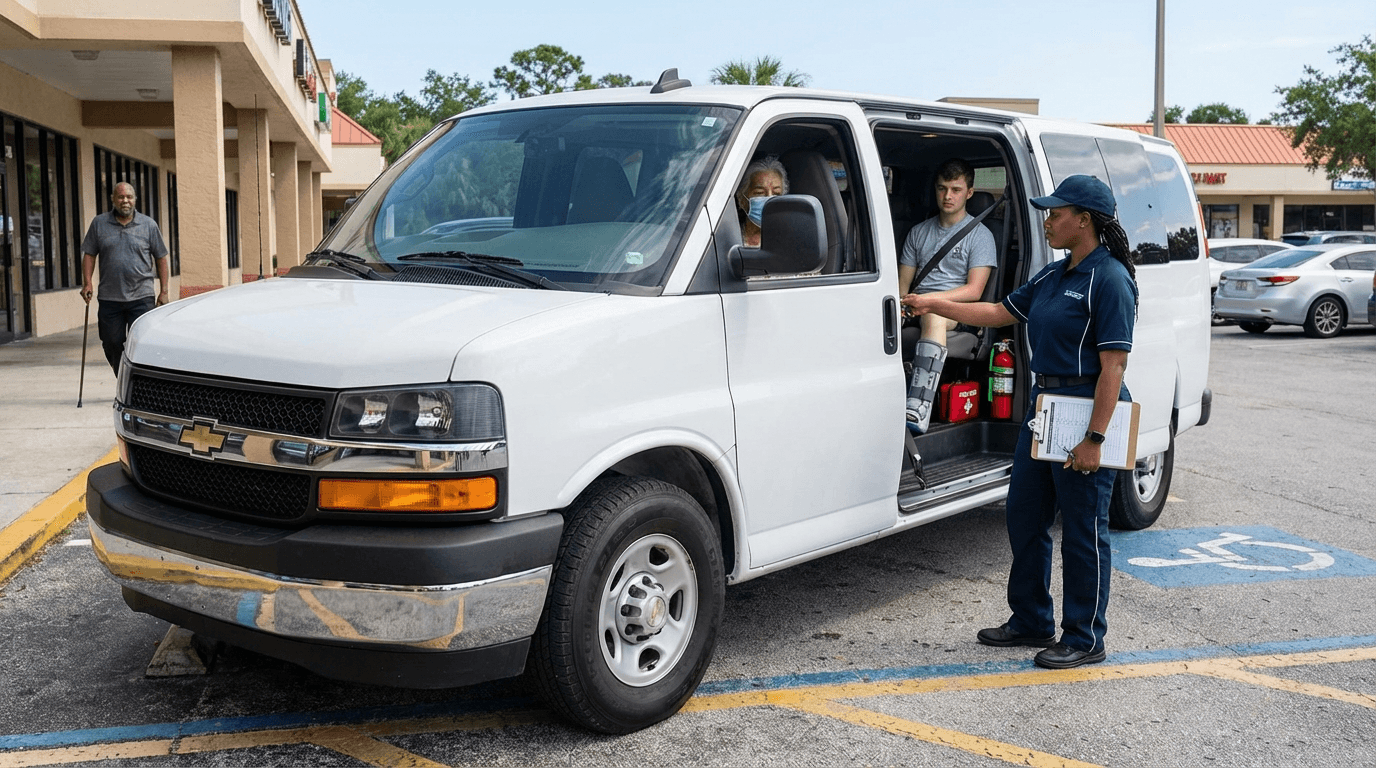
Every NEMT vehicle requires specific emergency equipment to ensure passenger safety during unexpected incidents. Federal regulations mandate vehicles carry properly mounted fire extinguishers that must be secured near the driver and protected from damage [18]. First aid kits need regular inspection to verify supplies remain current and complete, with contents tailored to handle common medical situations encountered during transport [15].
Beyond these basics, NEMT vehicles must maintain warning triangles or reflective devices that meet Department of Transportation standards, particularly for vehicles carrying more than eight passengers [19]. Communication equipment represents another critical safety component—whether using two-way radios exempt from DOT driving restrictions or cellular systems with backup power capabilities to maintain connectivity during emergencies [19]. Emergency equipment requires systematic verification through daily pre-trip inspections that document the presence and condition of each item [18].
For wheelchair-accessible vehicles, additional emergency supplies include backup manual release mechanisms for lifts, extra securement straps, and specialized tools for quick wheelchair disengagement if evacuation becomes necessary [15]. Proper emergency equipment readiness doesn't just satisfy compliance requirements—it directly impacts passenger outcomes during unexpected incidents, with comprehensive safety planning significantly reducing response times during critical situations [19].
Beyond the ADA regulatory framework discussed earlier, vehicle accessibility features represent tangible commitments to inclusive healthcare transportation. Every NEMT vehicle must incorporate boarding devices meeting strict specifications—hydraulic lifts supporting 600+ pounds or ramps with calculated slopes ensuring safe passenger access [17]. Fleet configurations vary by size: vehicles exceeding 22 feet require dual securement locations and boarding devices, while smaller vehicles maintain single configurations [17].
Dimensional requirements remain precise, including 56-inch minimum door heights measured from raised platforms, ensuring comfortable passenger entry [17]. Progressive accessibility extends beyond regulatory minimums through thoughtful features like contrasting edge markings on lifts and ramps, enhancing safety for visually impaired passengers [17]. These critical features demand systematic maintenance schedules with comprehensive documentation, elevating compliance into a continuous improvement process [20].
As transportation standards evolve following the Department of Transportation's 2016 guideline updates, forward-thinking providers stay ahead of enforcement changes through proactive adaptation [21].
Mastering NEMT driver excellence means blending defensive driving that cuts rain speed by 30% with PASS-certified techniques for 600-pound wheelchair lifts and dignity-first patient communication.
Defensive driving techniques form the foundation of NEMT driver training, shaping the future of passenger safety by focusing on anticipating hazards rather than merely reacting to them. Forward-thinking drivers learn to maintain safe following distances, carefully scan intersections, and identify potential risks before they escalate into dangerous situations [22]. These techniques adapt to various conditions: reducing speed by 30% in rain, doubling following distance in fog, and avoiding sudden movements on icy roads [22].
The PASS (Passenger Assistance, Safety and Sensitivity) certification, recognized as the industry standard for NEMT training, builds these skills through comprehensive modules that blend theory with practical application [24]. Patient handling techniques complement these driving skills with specific protocols for safely assisting passengers with various mobility limitations. Drivers learn proper body mechanics for passenger transfers, safe operation of wheelchair lifts (supporting at least 600 pounds), and securing mobility devices using four-point tie-down systems [22].
These technical skills integrate with sensitivity training that emphasizes treating passengers with dignity—addressing them directly rather than speaking through caregivers, using person-first language, and respecting personal space [23]. Communication techniques for patients with cognitive impairments or sensory limitations receive particular attention, with drivers trained to use clear, simple instructions while maintaining eye contact and waiting patiently for responses [22]. The most effective training combines online coursework with hands-on practice, particularly for wheelchair securement (detailed in Core Safety Protocols), where proper technique can prevent injuries during transport [24].
Driver certification and credentialing form the foundation of NEMT passenger safety, with requirements varying significantly across states. Most states require drivers to be at least 21 years old with a valid license appropriate for their vehicle type and a clean driving record [25]. Criminal background checks are mandatory across all jurisdictions, typically including multi-state criminal history reviews, sex offender registry checks, and driving record analysis [25]. These checks identify potential red flags that could compromise passenger safety. Specialized training certifications like the Passenger Assistance, Safety and Sensitivity (PASS) certification and the NEMTAC Certified Transportation Specialist (CTS) program have become industry standards [27].
These programs cover wheelchair securement, passenger assistance techniques, sensitivity training, and emergency management—skills essential for safely transporting medically vulnerable passengers [27]. First aid and CPR certification requirements vary by state; Florida mandates CPR certification while California focuses on passenger assistance training [25]. For providers operating across state lines, navigating this patchwork of regulations creates significant administrative challenges. Each state enforces different insurance minimums, Medicaid enrollment processes, and renewal cycles [25]. In California, providers need $1 million in liability coverage, while Texas has varying requirements depending on whether providers serve Medicaid clients [25].
This regulatory complexity has fueled debate about the benefits of unified national standards versus state-specific requirements. National standards could establish consistent safety benchmarks and reduce administrative burden, while state-specific rules address local healthcare needs [25]. Technology offers a transformative solution to these challenges, with advanced credential management systems that automatically track certification expiration dates, verify compliance with state-specific regulations, and maintain digital records of driver qualifications [26]. These innovative tools not only streamline administrative processes but also elevate safety standards by reducing compliance risks that could otherwise compromise passenger safety [26].
Effective NEMT safety requires moving beyond initial training to establish continuous education programs. Monthly refresher sessions keep drivers updated on changing protocols, medical guidelines, and regulatory requirements while addressing skill gaps identified through performance monitoring [28]. These sessions should combine classroom instruction with practical application—covering CPR recertification, first aid updates, and emerging best practices for passenger assistance. Simulation drills form the cornerstone of effective preparation, with monthly scenario-based exercises recreating specific emergency situations drivers might encounter.
These controlled simulations include practicing responses to passenger medical emergencies, vehicle breakdowns, and adverse weather conditions, allowing drivers to apply theoretical knowledge under pressure without risking passenger safety [28]. The most effective programs implement a tiered training approach that builds complexity over time—beginning with basic scenarios before advancing to multi-faceted emergencies requiring split-second decision making. Traffic fatalities increased by 19% between 2019-2022, underscoring the critical importance of proactive safety preparation in transportation services [29]. Companies implementing non-punitive incident reporting systems alongside regular drills report up to 30% lower accident rates, as drivers feel empowered to share near-misses and safety concerns without fear of reprisal [28].
Technology integration enhances simulation effectiveness through virtual reality training modules that recreate emergency scenarios with unprecedented realism, while automated tracking systems monitor certification expiration dates and ensure compliance with training requirements [28]. When building simulation programs, prioritize scenarios reflecting actual incidents from your operation—this data-driven approach focuses training on demonstrable risks rather than hypothetical situations. The PASS (Passenger Assistance, Safety and Sensitivity) certification program provides a standardized framework for simulation training, covering essential skills from wheelchair securement to emergency communication protocols [29]. Regular training contributes to driver retention by boosting confidence and job satisfaction, transforming safety education from a compliance requirement into a valued professional development opportunity that shapes the future of NEMT service excellence [29].
Telematics technology transforms NEMT fleet safety by combining telecommunications and data analytics to monitor driver behavior in real time. GPS-enabled systems track critical safety metrics including speeding, harsh braking, rapid acceleration, and route deviations—behaviors directly linked to passenger safety and comfort [30]. When potentially dangerous actions occur, managers receive instant alerts, enabling them to address patterns before accidents happen [32].
Some advanced systems provide in-cab feedback, notifying drivers immediately when they exceed speed limits or engage in risky behaviors, allowing for immediate correction [31]. Camera technology adds another safety dimension by identifying distracted driving behaviors like cell phone usage (responsible for 57% of today's accidents), drowsiness, and unsafe lane changes [30]. This comprehensive monitoring creates a foundation for targeted driver coaching and performance improvement.
Fleet managers use objective telematics data during driver evaluations to identify specific training needs, reward safe performance, and build a culture of accountability that elevates healthcare transportation standards [32]. For NEMT providers transporting medically vulnerable passengers, telematics-based monitoring establishes a comprehensive safety framework that reassures patients and caregivers that every trip is closely supervised [32]. As detailed in Data-Driven Continuous Improvement, these monitoring systems enable providers to transform safety management from reactive to proactive through advanced analytics and pattern recognition.
By fusing live traffic, weather, and hazard feeds with AI-calculated rerouting and patient-specific mobility constraints, NEMT systems now prevent vulnerable riders from ever encountering dangerous roads while still guaranteeing on-time medical appointments.
Real-time integration of traffic, weather, and road hazard data represents the future of NEMT safety management, transforming static routing into dynamic, responsive systems. Advanced AI-driven platforms process multiple data streams simultaneously—traffic congestion, construction zones, weather events, and accidents—to calculate safer alternative routes without driver intervention [34]. This proactive approach shapes the future of patient transportation by preventing exposure to hazardous conditions while maintaining critical appointment timeliness.
Pre-trip assessments incorporate weather forecasts and known road closures into initial planning, setting drivers up for success before they depart [33]. When unexpected situations develop, real-time alerts trigger immediate rerouting based on severity and impact, particularly valuable during extreme weather events when road conditions can deteriorate rapidly [33]. As detailed in our Communication and Monitoring section, these systems work in tandem with GPS tracking to create comprehensive safety oversight.
The integration extends beyond simple navigation by factoring in patient-specific safety constraints, ensuring route modifications maintain appropriate medical transport conditions [34]. Data collection from completed trips continuously improves the system's predictive capabilities, enabling increasingly accurate hazard avoidance that elevates healthcare access for vulnerable populations [34].
Accommodating patient-specific mobility constraints and equipment needs forms the cornerstone of safe NEMT routing, shaping the future of personalized medical transportation. Individual mobility requirements directly impact vehicle selection and routing decisions—patients with wheelchairs need accessible pathways with minimal slopes, while those using stretchers require routes with smoother roads to reduce discomfort [35]. Forward-thinking routing systems must incorporate detailed patient profiles that capture mobility limitations, specific equipment requirements, and medical conditions that influence transportation decisions.
As outlined in our Core Safety Protocols section, proper wheelchair securement follows structured protocols including four-point tie-down systems at 45° angles to minimize movement during transit [36]. Medical equipment presents additional routing challenges, as oxygen tanks, portable ventilators, and other life-supporting devices require specialized securement using designated straps and mounting brackets [35]. Equipment-related space requirements demand sophisticated matching—a patient needing a stretcher requires significantly different vehicle dimensions than one using a folding walker [37].
Creating personalized care plans based on comprehensive patient assessments enables providers to match appropriate vehicles containing necessary equipment with specific patient needs, elevating healthcare access through reduced transportation risks [37].
Optimizing pick-up and drop-off zones represents a critical opportunity to elevate healthcare access by preventing the 37,000+ annual injuries that occur during vehicle entry and exit [38]. Select locations with flat, even terrain and sufficient space to operate ramps or lifts without obstruction, shaping the future of safe patient transfers [39]. Avoid curbs, steep inclines, or narrow spaces that limit accessibility and increase fall risks [39].
Strategic drop-off planning positions vehicles as close as possible to building entrances, preferably in designated zones that provide shelter from weather and traffic [39]. For wheelchair users, prioritize areas that allow full deployment of mobility equipment with minimal navigation challenges, ensuring dignity and independence throughout the transportation journey [38]. Forward-thinking route selection incorporates data about high-risk intersections, construction zones, and traffic patterns to identify the safest approach to medical facilities [36].
Develop comprehensive contingency plans for each facility, mapping alternative drop-off locations when primary zones are unavailable or compromised by weather conditions [36]. This proactive approach significantly reduces transportation-related injuries while ensuring patients reach appointments safely and on time, truly shaping the future of NEMT safety [38].
AI-driven routing represents the pinnacle of innovation in NEMT safety, processing multiple risk factors simultaneously to shape the future of medical transportation. Advanced algorithms continuously analyze real-time data from traffic patterns, weather conditions, and road hazards to dynamically adjust routes, avoiding delays that could impact patient well-being [40]. These forward-thinking systems can reduce empty miles by up to 20% while maintaining the highest service standards, demonstrating how innovation drives both safety and efficiency [40].
When unexpected situations develop—from traffic accidents to sudden weather changes—AI immediately calculates safer alternative paths without requiring driver intervention, elevating healthcare access through proactive safety management [41]. The technology extends beyond navigation by incorporating patient-specific constraints, ensuring routes maintain appropriate medical transport conditions for each passenger's unique needs [40]. Safety benefits reach healthcare facilities as well, with research showing AI routing reduces missed appointments and improves care coordination through precise arrival timing [42].
The system's continuous learning capability refines decision-making based on completed trips, becoming increasingly adept at identifying and avoiding risk factors before they impact passengers [41]. This transformative approach shifts safety management from reactive to preventative, with measurable improvements in both passenger experience and operational outcomes—truly shaping the future of healthcare mobility [40].
GPS tracking, encrypted communications, and proactive incident-response protocols are converging to turn NEMT into a real-time healthcare safety net that protects both patient data and lives.
GPS tracking is shaping the future of NEMT safety by transforming how providers monitor and protect vulnerable passengers.
As detailed in the Driver Training section, modern tracking systems build upon telematics foundations to continuously monitor safety-critical behaviors while enabling real-time intervention capabilities [32].
This evolution from reactive to proactive safety management represents a fundamental shift in how NEMT providers elevate healthcare access through technology.
Secure communication represents a cornerstone of trust in NEMT services, elevating healthcare access by ensuring patients feel confident sharing sensitive information. NEMT providers handle various types of Protected Health Information (PHI) throughout the transportation journey, making robust security measures not just regulatory requirements but ethical imperatives [44]. Modern communication systems are revolutionizing patient privacy through sophisticated safeguards. End-to-end encryption, intelligent access controls, and automatic logout features create multiple layers of protection against unauthorized access [44]. These technological advances transform compliance from a burden into a competitive advantage, demonstrating commitment to patient dignity and trust. Operational excellence demands comprehensive communication protocols across all channels.
Phone communications require privacy guidelines including secure environments, identity verification, and minimum necessary standards [44]. Email systems need enhanced protections—encryption, password-protected attachments, and secure servers—particularly crucial given that healthcare breaches average $9. 8 million in damages [44]. Family communication protocols must balance accessibility with security through pre-established verified contacts, documented consent procedures, and transportation-focused disclosures [44]. The future of NEMT communication lies in intelligent platform design that inherently protects patient information. Role-based access controls ensure staff view only essential data for their responsibilities, while secure channels facilitate necessary communication with complete audit trails [45][46].
This systematic approach to security transforms every interaction into an opportunity to build trust and demonstrate professional excellence. Investment in ongoing security education shapes the future of patient communication. Beyond avoiding penalties of up to $50,000 per violation, comprehensive HIPAA training—both general and role-specific—empowers staff to handle sensitive information with confidence throughout every patient interaction [45]. This commitment to continuous improvement in communication security directly contributes to better health outcomes by ensuring patients feel safe sharing the information necessary for coordinated care.
Standardized emergency protocols represent the foundation of professional NEMT services, transforming potential crises into manageable situations that prioritize passenger safety and continuity of care. Building upon the emergency training programs discussed in Driver Performance Management, these protocols translate preparation into action when moments matter most. Immediate response procedures focus on systematic scene assessment that protects both passengers and providers. Drivers evaluate safety hazards, assess passenger conditions, and make informed decisions about secure positioning—all while maintaining the composure that vulnerable patients depend upon [28]. Communication with emergency services requires precision: exact location details, clear passenger status updates, and continuous coordination with dispatch centers that can mobilize additional resources [47].
Patient care during emergencies demands both technical competence and emotional intelligence. First aid administration within certification limits combines with reassuring communication tailored to medically vulnerable individuals' unique needs [47]. This dual focus on physical and psychological support exemplifies how NEMT providers elevate healthcare access even during challenging circumstances. Documentation excellence ensures lessons learned shape future safety improvements. Comprehensive incident reports completed within 24 hours capture critical details—times, locations, conditions, and witness information—while maintaining HIPAA compliance through careful limitation to necessary medical information [48].
This commitment to thorough documentation transforms individual incidents into organizational learning opportunities. Post-incident coordination demonstrates how standardized protocols extend beyond immediate response. Arranging alternative transportation, updating healthcare facilities, collaborating with authorities, and conducting thorough debriefs create a comprehensive safety ecosystem [47]. These systematic approaches, reinforced through the simulation drills covered in driver training, ensure theoretical knowledge translates into practical excellence when passengers need it most [28].
Post-trip safety audits represent the future of NEMT excellence, transforming every completed journey into an opportunity for continuous improvement. This proactive approach to safety management exemplifies how data-driven insights can elevate healthcare access by preventing issues before they impact vulnerable passengers. Comprehensive audit frameworks examine multiple safety dimensions simultaneously. Driver behavior metrics—including acceleration patterns, braking intensity, and route adherence—combine with passenger feedback and vehicle condition assessments to create holistic safety profiles [49]. Implementing structured review processes within 24 hours ensures insights remain fresh and actionable, with standardized documentation supporting sophisticated trend analysis across the entire fleet [49]. Technology revolutionizes audit efficiency without sacrificing thoroughness.
Mobile applications and GPS tracking systems capture objective performance data that eliminates guesswork from safety management [49]. These digital tools transform what once required hours of manual review into streamlined processes that identify improvement opportunities in real-time. The power of post-trip audits lies in creating positive feedback loops that shape organizational culture. Sharing results through constructive coaching rather than punitive measures fosters environments where safety discussions become collaborative opportunities for growth [50]. This approach recognizes that drivers are partners in the mission to provide exceptional patient care, not merely employees to monitor. Patient perspectives provide irreplaceable insights that technology cannot capture alone.
Automated post-trip surveys reveal nuanced safety concerns—from comfort during specific route segments to communication effectiveness during pickups [37]. These qualitative insights, when integrated with quantitative metrics, create comprehensive understanding of the passenger experience. Leading NEMT providers demonstrate how systematic audit integration drives measurable results. Companies implementing comprehensive audit systems report up to 30% reductions in accident rates—proof that investing in continuous improvement directly enhances passenger safety [49]. By updating training programs, refining maintenance schedules, and optimizing routing strategies based on audit findings, providers transform data into action that shapes the future of medical transportation [50].
By fusing GPS-driven KPIs like 95-99 % trip completion and wheelchair-securement compliance with real-time driver-behavior analytics, NEMT providers convert raw data into a relentless, passenger-safety engine that preempts incidents and turns every ride into a measurable step toward zero-harm healthcare access.
Elevating healthcare access through data-driven safety management requires tracking specific metrics that directly impact passenger wellbeing. Critical safety KPIs include on-time performance (measuring punctuality within 15 minutes), trip completion rates (targeting 95-99%), and no-show/cancellation rates (typically 15-30% in NEMT services) [51]. Vehicle utilization metrics reveal resource deployment efficiency and emergency backup availability, ensuring we're always prepared to serve our communities [52]. As discussed in the Driver Training section, performance metrics monitor safety-critical behaviors that directly affect passenger comfort [53].
For wheelchair-dependent passengers, specialized metrics track proper securement procedures, ensuring consistent deployment of essential safety systems [52]. Patient feedback scores provide invaluable qualitative insights into perceived safety during transport, with post-trip surveys revealing concerns that technology alone might miss [53]. Compliance metrics safeguard against regulatory violations that can result in fines up to $50,000, protecting both passengers and providers [51]. Digital transformation is revolutionizing this process—GPS-enabled systems reduce manual tracking effort by 60-80% while generating comprehensive compliance documentation [51].
By establishing clear benchmarks, we transform passive measurements into active management tools that shape the future of passenger safety [52]. This forward-thinking approach combines automated data collection with strategic analysis sessions, creating a continuous improvement cycle that places passenger safety at the heart of every decision [53].
Advanced analytics is shaping the future of incident management, transforming reactive responses into proactive safety strategies by identifying patterns across seemingly isolated events. Modern NEMT platforms are elevating healthcare access by combining comprehensive tracking with driver behavior metrics to reveal safety correlations invisible to manual analysis [54]. These innovative systems automatically flag critical incidents like harsh braking, rapid acceleration, and unauthorized route deviations—behaviors directly linked to passenger safety—while creating intuitive visual dashboards that highlight safety hotspots requiring intervention [55].
Analytics engines identify recurring safety issues by location, time, driver, or vehicle type, converting scattered incident data into actionable safety improvements that protect our most vulnerable passengers [56]. Traffic analysis reveals that left turns account for 22% of all vehicular accidents and more than half of cross-path collisions, empowering providers to design safer routes that minimize these high-risk maneuvers [56]. Predictive modeling advances this approach further by forecasting potential incidents before they occur, analyzing historical data alongside real-time conditions to identify risk factors that might compromise passenger safety [54].
Companies implementing comprehensive analytics report up to 30% lower accident rates through this proactive approach—a testament to how data-driven strategies are revolutionizing passenger safety [55]. Beyond internal safety management, analytics provides compelling evidence during compliance audits, transforming subjective safety claims into data-driven documentation that satisfies regulatory requirements while strengthening relationships with insurance partners [55].
Patient voices are instrumental in shaping the future of safe transportation, offering insights that technical data alone cannot capture. By systematically collecting passenger experiences, providers can identify critical routing challenges—from uncomfortable road conditions to hazardous pickup locations—that directly impact safety and comfort [53].
Multi-channel feedback systems, including automated post-trip surveys and mobile app ratings, capture both quantitative metrics and qualitative insights about specific route sections [53]. This comprehensive approach reveals patterns across multiple trips, distinguishing systemic issues from isolated incidents and empowering providers to elevate healthcare access through targeted improvements.
Patients consistently value timeliness and comfort—two factors profoundly influenced by intelligent route selection [57]. Higher satisfaction correlates strongly with smooth, efficient routes that minimize discomfort from poor road conditions [57].
Shaping the future of NEMT safety requires continuous policy evolution that embraces industry innovations and emerging best practices. By incorporating comprehensive incident data analysis, providers can transform scattered information into strategic safety improvements that protect vulnerable passengers [49]. Systematic trip analysis—examining driver behavior, passenger feedback, and vehicle conditions—enables proactive risk identification before incidents impact service quality [49].
As detailed in our Intelligent Routing section, technology integration is revolutionizing safety protocols through AI-driven systems that process multiple data streams and calculate safer alternatives automatically [59]. Creating a culture of safety excellence means implementing non-punitive reporting systems that empower drivers to share near-misses openly—an approach proven to reduce accident rates by up to 30% [59]. Emergency response protocols must acknowledge the unique vulnerabilities of medical transport passengers, establishing clear procedures that prioritize both immediate safety and compassionate care [36].
By closing feedback loops through constructive coaching and open dialogue, we foster environments where safety concerns drive positive change rather than defensive reactions [36]. This commitment to continuous improvement extends to training programs that evolve with industry standards, ensuring every team member is prepared to deliver the exceptional care our passengers deserve while maintaining the highest safety standards [36].
MediDrive turns NEMT safety from a checklist into a living system—its AI-powered dashboard fuses real-time GPS, driver analytics and 50+ patient-specific parameters to auto-adapt routes and prevent incidents before they happen.
MediDrive's platform represents the future of safety-first NEMT routing, integrating advanced technologies that elevate healthcare access through comprehensive passenger protection. Building on the safety protocols discussed throughout this guide, our system transforms theoretical best practices into actionable technology. The platform's unified safety dashboard consolidates the real-time monitoring capabilities detailed in previous sections—from GPS tracking to driver behavior analytics—into a single command center that empowers dispatchers to proactively safeguard every journey [60].
Our AI-powered routing intelligence goes beyond basic navigation, implementing the dynamic safety strategies outlined in Section 4 to automatically adapt routes based on patient-specific constraints, real-time hazards, and medical equipment requirements [61]. For healthcare providers seeking to implement comprehensive safety protocols, MediDrive's integrated approach ensures that wheelchair securement standards, emergency response procedures, and communication protocols work seamlessly together. Each trip generates actionable safety insights that feed our continuous improvement engine, transforming data into enhanced passenger protection [32].
This holistic safety ecosystem demonstrates our commitment to shaping the future of healthcare transportation—where technology doesn't just track safety metrics but actively prevents incidents before they occur.
At MediDrive, we recognize that true safety extends beyond standardized protocols to embrace each passenger's unique journey. Our platform elevates personalized care by maintaining comprehensive passenger profiles that go beyond basic requirements to capture the nuanced needs discussed in Section 4's patient-specific constraints. With over 50 configurable routing parameters, we ensure every trip aligns with individual safety requirements—from specialized wheelchair configurations to complex medical equipment arrangements [62].
What sets MediDrive apart is our real-time adaptability; safety preferences adjust dynamically as patient conditions evolve, ensuring continuous protection without service disruption. Our multilingual communication system addresses the diverse needs of vulnerable populations, delivering updates through each passenger's preferred channel to reduce anxiety and empower participation in their healthcare journey [32]. The platform's intelligent curbside assistance features minimize exposure to environmental hazards at pickup and drop-off zones, implementing the safety considerations outlined in earlier sections through automated precision [62].
By transforming safety customization from a reactive process to a proactive standard, MediDrive is shaping a future where every NEMT trip is inherently designed around passenger wellbeing.
MediDrive transforms the comprehensive training requirements detailed in Section 3 into streamlined, technology-driven excellence. Our platform doesn't just track certifications—it actively elevates driver capabilities through intelligent credential management that anticipates renewal needs and automates compliance across diverse state regulations [63]. We've partnered with leading certification bodies to integrate PASS training directly into our ecosystem, ensuring drivers master the defensive driving techniques, patient handling protocols, and emergency response procedures essential for safe NEMT operations [63].
Our innovative simulation modules build upon the industry best practices discussed earlier, allowing drivers to experience real-world scenarios in controlled environments before encountering them on the road [64]. What distinguishes MediDrive's approach is our commitment to continuous improvement—the platform analyzes driver performance data to identify skill gaps and automatically recommends targeted training interventions. This proactive development model ensures your team stays ahead of evolving safety standards while maintaining seamless compliance with varying state requirements, from New York's LENS verification to complex Medicaid credentialing systems [65].
By entrusting your training needs to MediDrive, you're not just meeting regulations—you're shaping the future of professional NEMT service delivery.
At MediDrive, we understand that investing in safety-first routing delivers transformative returns that extend far beyond traditional metrics. The data-driven continuous improvement strategies outlined in Section 7 come to life through our platform's advanced analytics, which track the triple bottom line of safety investments: operational efficiency, financial performance, and patient outcomes. Research demonstrates the compelling economics of comprehensive safety programs—with documented returns of $11.
08 for every dollar invested through reduced hospitalizations and improved healthcare access [67]. MediDrive's intelligent routing optimization, building on the AI-driven strategies discussed earlier, typically reduces operational costs by 20% while simultaneously enhancing passenger safety [66]. Yet the true measure of success transcends financial returns.
Our platform captures granular ride-level data that reveals how safety investments empower patients to actively participate in their healthcare journey, creating cascading benefits throughout the care continuum [2]. By implementing MediDrive's comprehensive safety ecosystem, providers position themselves at the forefront of industry transformation—where every safety enhancement contributes to a virtuous cycle of improved outcomes, reduced costs, and elevated patient experiences [67]. This forward-thinking approach to ROI measurement ensures that as you shape the future of healthcare transportation with MediDrive, you're creating sustainable value that benefits all stakeholders while advancing the standard of care across the industry.
Key Takeaways
References
Delivered to your inbox — compliance updates, industry news, and best practices.
Explore more insights from this category